Baroness Aglionby's Maiden Speech
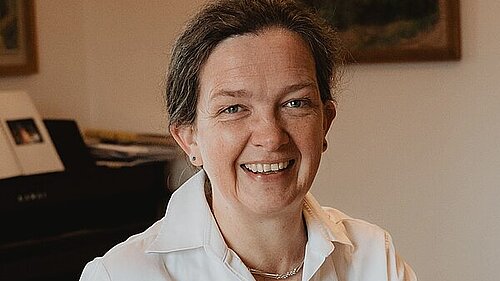
Baroness Julia Aglionby made her maiden speech in the House of Lords earlier today.
By convention it is a non-political set of remarks. She said
"My Lords, I declare my interests as a practising agricultural valuer and professor of practice in protected areas.
"It is with equal measures of trepidation and delight that I stand before your Lordships to make my maiden speech: trepidation because, as a committed non-conformist, this was not a Chamber I had expected to address as a Member; delight because the House of Lords provides such a crucial role in scrutinising legislation and probing government. I am honoured and humbled to have been appointed to work alongside such eminent, kind and experienced colleagues.
"I would like to thank Black Rod, his staff and the doorkeepers, as well as the Clerk of the Parliaments and her team, who managed my introduction with grace and patience. I also thank my supporters, my noble friends Lord Wallace of Saltaire and Lady Parminter, for introducing me.
"Today, at this Budget debate, I wish to touch on the allocation of public finances for farming, food and land management. For the last three decades I have been working to empower marginal farm businesses in protected landscapes and on common land to improve outcomes for nature, landscape, recreation, cultural heritage, water and climate resilience, alongside farmers’ core purpose of food production.
"I come to this House from my home county of Cumbria, as an agricultural valuer who focuses on negotiating environmental schemes on upland commons between people with conflicting interests. Through previous roles on the board of Natural England and from running the Foundation for Common Land, my interests stretch from Bodmin to the North York Moors, and from the New Forest to the Lake District. Alongside this, I have maintained a long-term research interest in Indonesian national parks.
"England’s protected landscapes, both national parks and national landscapes, cover 24% of England and are managed by over 21,000 farmers, many of whom are tenants and commoners. In my experience, the management of our countryside works best when we pay as much attention to building social relationships as to environmental outcomes and business profitability.
"In 2018, the Government made a commitment to fund farmers through a policy of public money for public goods, using environmental land management schemes. This commitment has been renewed by all successive Governments. My concern, when I reviewed this Budget and recent spending reviews, is that I remain to be convinced that this commitment can be delivered. This is because warm words are cold comfort without adequate finances or an effective delivery mechanism. This Budget appears blind to both these matters.
"With regard to the finances, over the last decade there has been a 60% decline, in real terms, in public payments to farmers and land managers. In terms of delivery, for too many farmers their experience of accessing environmental land management schemes is akin to being put at the top of a white-water canyon in a canoe, but without a paddle. The ride has been bumpy for almost everyone and catastrophic for too many. Demands on mental health services by farmers are ever increasing and the net result for society is missed opportunities to do more for nature, our rivers, the rural economy and climate adaptation. Do remember that our protected landscapes receive over 230 million visits each year.
"The proper management of the 70% of England that is farmed is not a “nice to have”; it is essential to our national security, especially in this time of rapid climate change and global instability. The reliable provision of healthy and affordable food supplies to nearly 70 million citizens is a core duty of government, for we all function better on three meals a day. That said, if I keep eating teacakes in the Peers’ Dining Room at my current rate, I will have in-built stores to more than meet the Secretary of State’s advised three days of reserves.
"Earlier this year, the Joint Intelligence Committee recommended investing in nature restoration for our national security, and Lieutenant General Richard Nugee’s 2021 Ministry of Defence report concluded that “climate change threatens peace”. Peace, in my view, is the dividend that we reap as a resilient and well-prepared nation that plays its part on the world stage, leading and demonstrating by example. But peace does not just happen because we wish it; we as a nation must invest public funds in building peace at home and abroad, through addressing the challenges of food, nature and climate.
"I therefore urge the Government to review their funding for sustainable food production and environmental land management. A great start would be to match the percentage spent in 2016 on farming and environmental schemes. In that year, the UK spent a heady 0.3% of public expenditure on the 70% of England that is farmed. Now, in 2026, that figure has halved. Restoring the 0.3% would increase England’s farming and countryside budget to approximately £3.7 billion: a good value-for-money investment in the essential building blocks for our national security, resilience and preparedness.
“Having decided to live adventurously and take the opportunity that membership of this House affords, I look forward, with the support of your Lordships, to each week bringing fresh from Cumbria the view from the fells and, as an enthusiastic outdoor swimmer, also the view from the river.”